
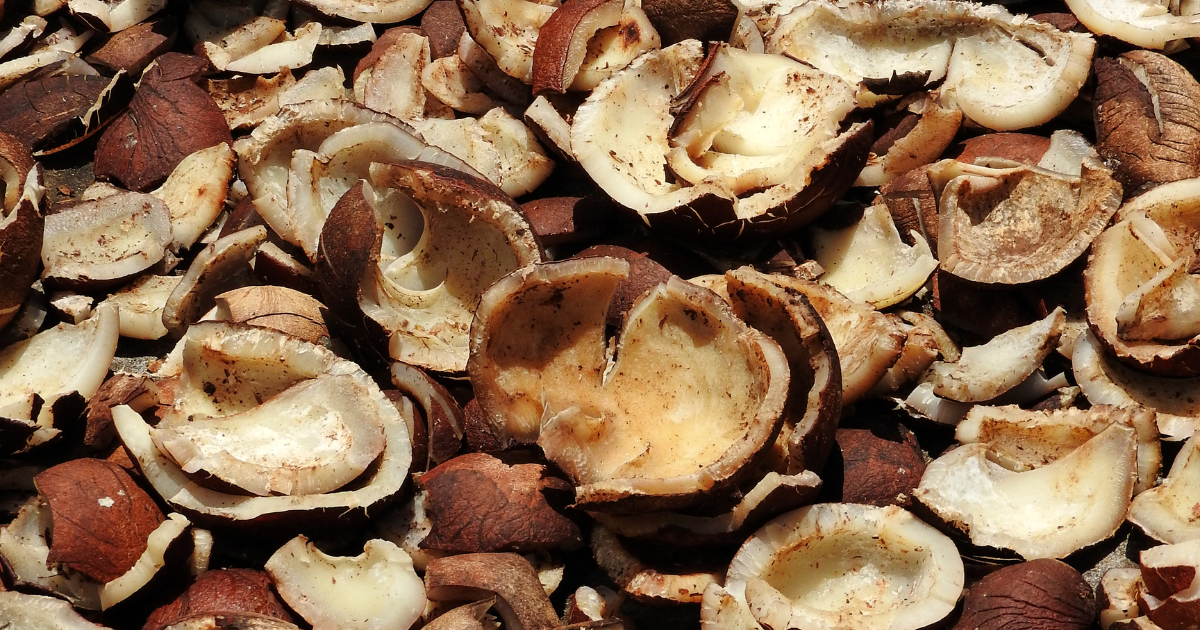
Copra refers to dried coconut meat and serves as a key intermediate material in coconut processing. The drying process significantly reduces moisture content, allowing copra to be stored and processed efficiently while preserving its oil-bearing properties.
The quality of copra is influenced by drying methods, handling, and coconut maturity. Proper drying helps prevent mold growth and maintains stable oil content, which is essential for downstream processing. Variations in color and texture often reflect differences in processing conditions rather than raw material quality alone.
Copra is primarily valued for its oil content, but its role extends beyond oil extraction. Residual materials from copra processing can be utilized further, contributing to efficient resource use. This layered utilization highlights how copra fits into broader coconut-based value chains.
From a sustainability perspective, copra production relies on mature coconuts that are already part of existing agricultural systems. This minimizes additional environmental impact and supports full utilization of harvested crops.
As a traditional yet relevant material, copra continues to demonstrate how simple processing techniques can produce stable, versatile raw materials with wide-ranging applications.